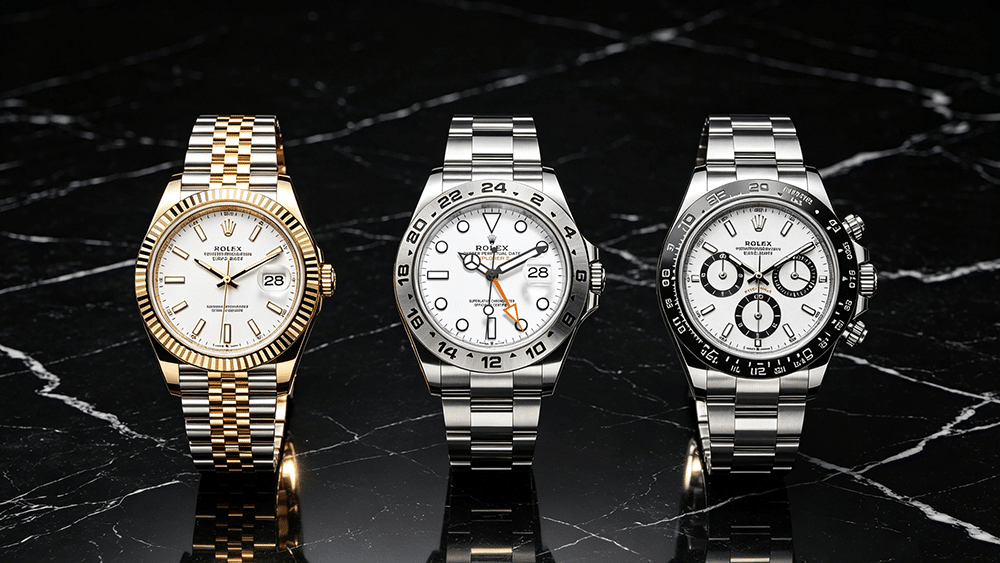
Over the past few years, the popularity of sports Rolex models has been almost entirely dominated by black-dial variants—the Black Submariner, Black Daytona and Black Explorer II have become virtually synonymous with ‘hard currency’ among watch enthusiasts. However, since 2023, interest in white-dial Rolex models has been steadily rising, with secondary market prices and social media buzz quietly catching up with—and in some cases even surpassing—certain black-dial models. The appeal of the white-dial Rolex lies in its sense of contradiction: it can be the cleanest and most refined presence on a formal dining table, whilst also displaying a rugged character in sporting contexts that is every bit as impressive as that of the black-dial models. It appears bright and translucent in sunlight, yet takes on a warm, milky-white texture in low light—a quality that changes with the light, which the black-dial models simply cannot offer.
 文章源自高品质复刻手表-https://www.bbtwatch.com/en/wbzs/128481.html/
Among the many white-dial Rolex models, three are most frequently compared with one another, yet each represents a distinctly different product philosophy: the Datejust is the quintessential all-rounder that bridges formal and casual wear; the Explorer II is the elegant embodiment of a tool watch with GMT functionality; and the Cosmograph Daytona stands as the pinnacle of the brand's chronograph offerings. Though their retail prices span a considerable range and each targets a different niche, they are all brought onto the same shopping list by virtue of their white dials. This article will conduct a comprehensive breakdown across five dimensions—functionality, style, market, reviews, and pairing—to help you make a clear-cut decision.文章源自高品质复刻手表-https://www.bbtwatch.com/en/wbzs/128481.html/
Overview of the Three Watches
Datejust: A classic amongst classics
 文章源自高品质复刻手表-https://www.bbtwatch.com/en/wbzs/128481.html/
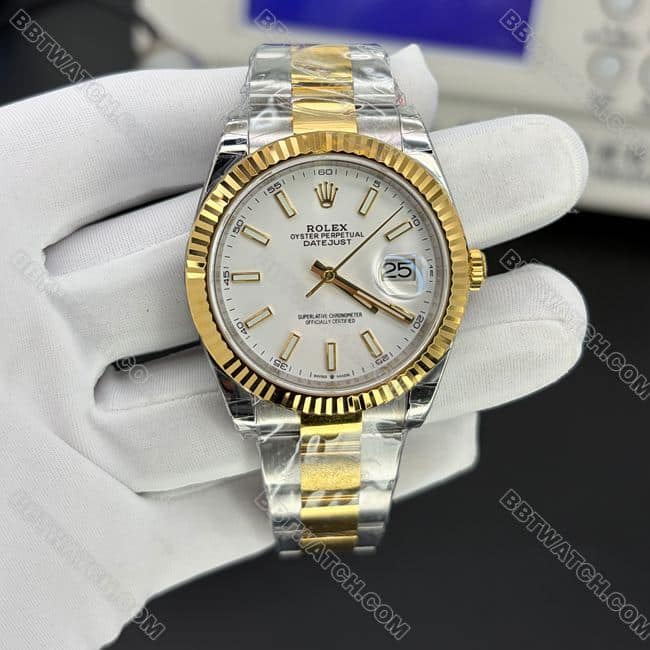
Introduced in 1945, the Datejust was the world’s first self-winding, water-resistant wristwatch to feature a date window at the 3 o’clock position, and remains one of Rolex’s longest-standing and most diverse collections. The classic combination for the white-dial Datejust is a stainless steel case paired with a gold fluted bezel (tooth bezel) and a five-link Jubilee bracelet; the baton hour markers and gold hands create an elegant contrast of light and dark against the white dial. Its core positioning is that of an all-purpose watch – neither as slim and formal as a pure dress watch, nor as thick and rugged as a professional sports watch. The 41-millimetre case diameter (also available in 36 millimetres) suits the vast majority of wrists, whilst its 100-metre water resistance is more than sufficient for all everyday situations.文章源自高品质复刻手表-https://www.bbtwatch.com/en/wbzs/128481.html/
Explorer II: An elegant reinvention of the tool dial
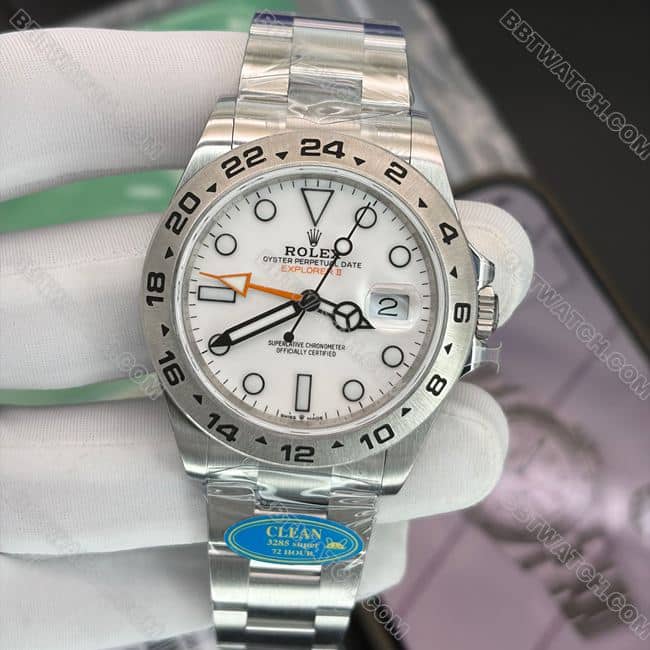
The Explorer II was originally designed for cave explorers and polar workers, with its defining features being a fixed 24-hour graduated bezel and a striking orange GMT hand, allowing simultaneous reading of two time zones and distinguishing AM from PM in underground environments where day and night are indiscernible. The white-dial Explorer II is nicknamed the "Orange Hand" by watch enthusiasts due to the high contrast of the orange hand against the white dial, making it the most popular colorway in the series. The current model measures 42mm in diameter, with a full stainless steel case and Oyster bracelet, presenting a more sporty feel overall compared to the Datejust, yet without the aggressive look of the Submariner. The white dial with black hour markers and hands, complemented by the iconic orange GMT hand, creates a dial with rich layered information that never appears cluttered.文章源自高品质复刻手表-https://www.bbtwatch.com/en/wbzs/128481.html/
Daytona: the pinnacle of chronograph watches
 文章源自高品质复刻手表-https://www.bbtwatch.com/en/wbzs/128481.html/
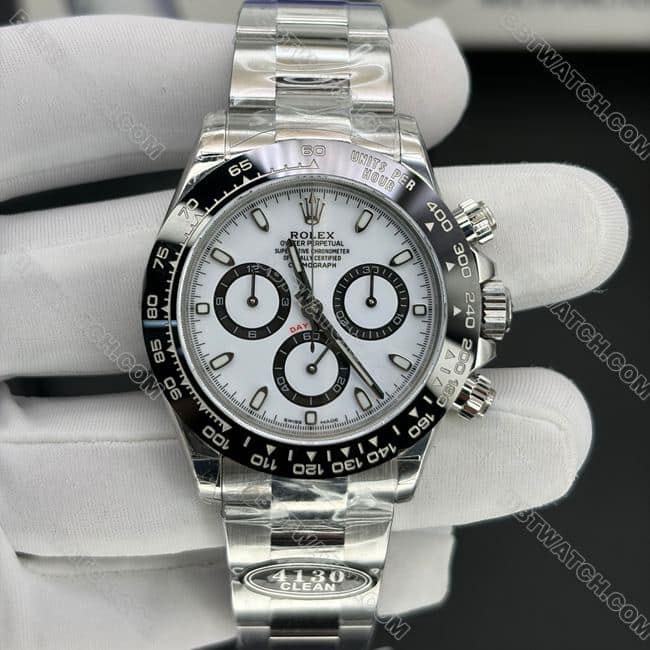
The Daytona was born in 1963, designed specifically for motor racing, and named after the Daytona International Speedway in Florida, USA. It is Rolex's only chronograph and one of the most iconic models in the luxury watch world. The white-dial Daytona typically features a black ceramic tachymeter bezel and three black sub-dials. This "Panda" dial colorway is highly regarded among watch enthusiasts and is one of the most sought-after color variations on the secondary market. The current model has a case diameter of 40mm, making it the most compact of the three. The chronograph pushers on both sides of the case, along with the crown, form a distinctive side profile. The three black sub-dials on the white dial are responsible for the chronograph hours, chronograph minutes, and small seconds respectively. The symmetrical tri-compax layout is the most recognizable design language of the Daytona.文章源自高品质复刻手表-https://www.bbtwatch.com/en/wbzs/128481.html/
In-depth functional comparison
Movement and timekeeping performance
All three watches are equipped with in‑house Rolex movements, certified as Superlative Chronometers, with an accuracy of within ±2 seconds per day—far exceeding the COSC standard. The Datejust is powered by the Calibre 3235, featuring the Chronergy escapement and a power reserve of approximately 70 hours—the most pure and straightforward three‑hand movement. The Explorer II is powered by the Calibre 3285, which adds a GMT function to the 3235 base, also with around 70 hours of power reserve. Its hour hand can be adjusted independently without affecting the minute and second hands, making cross‑time‑zone travel extremely convenient. The Daytona is powered by the Calibre 4131 (new for 2023), an integrated self‑winding chronograph movement designed specifically for timing functions, with a power reserve of about 72 hours. Its column‑wheel construction ensures crisp and precise chronograph pusher operation, making it the most technically sophisticated of the three.文章源自高品质复刻手表-https://www.bbtwatch.com/en/wbzs/128481.html/
Case, water resistance, and durability
All three models feature the Oyster case construction, with the middle case forged from a solid block of metal. The screw-down case back and crown together form a watertight seal, offering a water resistance of 100 meters – which is quite impressive for a chronograph, as the presence of chronograph pushers often complicates water resistance design. In terms of materials, the Datejust is available in full steel, two-tone (steel and gold), and full gold versions; the white-dial two-tone model compared here is the most classic. The Explorer II is currently offered only in full stainless steel, consistent with its tool-watch positioning. The Daytona is available in full steel, two-tone, and full gold versions, with the white-dial steel model being the most sought-after on the market. All three watches feature sapphire crystal glass, which is scratch-resistant and durable.文章源自高品质复刻手表-https://www.bbtwatch.com/en/wbzs/128481.html/
Differences in bezel and dial functions
The bezel design is the most intuitive differentiator among the three models. The 18k yellow gold fluted bezel on the Datejust is not merely decorative; it originally served as the tool contact surface for screwing down the case, and has now become its most recognizable hallmark. The fixed 24-hour steel bezel on the Explorer II cannot be rotated, and works together with the orange GMT hand to read a second time zone. The numerals on the bezel are produced using a relief process, offering a distinct tactile feel. The black Cerachrom ceramic tachymeter bezel on the Daytona is the most technologically advanced, being virtually fade-proof and scratch-resistant, and can measure average speed over a known distance.文章源自高品质复刻手表-https://www.bbtwatch.com/en/wbzs/128481.html/
In terms of dial functions, the Datejust is the most straightforward, with hour, minute, and second hands plus a date display, featuring a Cyclops lens at the 3 o'clock position that magnifies the date by 2.5 times. The Explorer II adds an orange GMT hand and a date window, with the GMT hand completing one full rotation every 24 hours. The Daytona offers the richest information: the large central seconds hand is the chronograph seconds hand (normally stationary), the sub-dial at 3 o'clock is a 30-minute counter, the one at 9 o'clock is a 12-hour counter, and the one at 6 o'clock is the running small seconds hand. There is no date display.
Strap/Bracelet and wearing comfort
The Datejust's Jubilee bracelet consists of five rows of metal links, offering a soft and comfortable fit – the most comfortable of the three. On the two-tone versions, the interplay of steel and gold links creates a rich play of light. Both the Explorer II and the Daytona feature the Oyster bracelet with three rows of links, which are wider and more robust, delivering a sporty feel with a firmer, though slightly less flexible, fit. All three bracelets are equipped with the Easylink comfort extension link, allowing for approximately 5mm of tool-free micro-adjustment to accommodate wrist size changes due to temperature variations.
| Comparison items | Datejust | Explorer II | Daytona |
|---|---|---|---|
| Watch case diameter | 41mm (also available in 36mm) | 42mm | 40mm |
| Movement model | 3235 | 3285 | 4131 |
| power reserve | Approximately 70 hours | Approximately 70 hours | Approximately 72 hours |
| Complex functions | date display | Date + GMT dual time zone | Chronograph + Tachymeter |
| Water Resistance | 100 metres | 100 metres | 100 metres |
| Bezel material | 18K yellow gold fluted bezel | Stainless steel fixed 24-hour bezel | Cerachrom ceramic tachymeter bezel |
| Bracelet/strap type | Jubilee bracelet | Oyster bracelet | Oyster bracelet |
Design style comparison
Overall character and brand positioning
To summarise in three words: the Datejust is elegant and balanced, the Explorer II is rugged and practical, and the Daytona is sporty and luxurious. The Datejust’s bezel, five-link bracelet and date window combine to form the quintessential image of ‘Rolex’ in most people’s minds—understated yet instantly recognisable to connoisseurs. It is precisely this understated distinctiveness that accounts for its enduring popularity. The Explorer II has a more outdoor and utilitarian character; its 42-millimetre case diameter and 24-hour bezel give it a strong presence, whilst the orange GMT hand serves as both a visual focal point and its most distinctive feature. The white dial adds a touch of clean, crisp simplicity to its sporty aesthetic. The Daytona possesses the most distinctive character; its symmetrical triple-sub-dial layout and ceramic bezel confer exceptional recognisability. Whilst its 40-millimetre case diameter is on the smaller side for a sports watch, it appears refined rather than bulky on the wrist. The ‘panda’ colour scheme—a white dial with black sub-dials—is a classic that commands attention in any light.
Differences in the details of dial design language
Although all three white dials share a white base, their finishing techniques differ. The Datejust's white dial typically features sunray finishing, with a delicate radial gloss emanating from the center outward, and its baton hour markers are filled with luminescent material. The Explorer II's white dial also has sunray finishing, but its hour markers are more rugged—an inverted triangle at 12 o'clock, a rectangle at 6 o'clock, and circles for the rest—rooted in the tradition of early tool watches. The hour hand is a Mercedes hand, the minute hand is a slender baton, and the orange GMT hand is arrow-shaped; the three distinct forms make them easy to distinguish at a glance. The Daytona's white dial has a matte or subtly glossy finish, with its three black sub-dials featuring concentric circular textures that create a contrast in texture against the white main dial. Its hour markers are simple batons without numerals, and the red "DAYTONA" printed at 6 o'clock serves as the finishing touch.
Size and wrist fit recommendations
The Datejust 41mm is suitable for wrist circumferences above 16cm, while the 36mm version fits wrists from 15 to 17cm. Its sleek lug design makes it wear smaller than its nominal size. The Explorer II 42mm is the largest of the three, with a wider lug-to-lug distance, and is recommended for wrists above 17cm. Those with slender wrists are strongly advised to try it on in person at a boutique. The Daytona 40mm, despite having the smallest case diameter, gains lateral width from its chronograph pushers, so it does not appear small on the wrist. It is suitable for wrists above 15.5cm, making it the most slender-wrist-friendly sports model among the three.
Market performance and user reviews
Retail price and secondary market trends
The official retail price positioning differs significantly. The Datejust two-tone white-dial model has a retail price of approximately RMB 100,000 (depending on case size and materials), making it the most accessible among the three in terms of entry threshold. The Explorer II all-steel white-dial model has a retail price of about RMB 75,000, but popular models often sell above retail price, so the actual purchase price may be higher. The Daytona all-steel white-dial model has a retail price of about RMB 105,000, but it has long traded at a substantial premium on the secondary market. The white-dial steel Daytona typically fluctuates between 1.5 and 2 times its retail price on the second-hand market, making it the most severely overpriced of the three. Prices for popular Rolex sports models are heavily influenced by supply and demand, with significant variations across different periods, conditions, and completeness of accessories. It is recommended to compare prices from multiple sources before purchasing, choose reputable channels, and request the complete warranty card and booklet.
Resale value and liquidity analysis
In terms of value retention, the Daytona is the strongest. Steel Daytona models have long traded above retail price, and second-hand pieces in good condition with complete accessories have limited depreciation upon resale. Some popular colorways can even be sold at or above the original price. The Explorer II comes next; the white-dial orange-hand version, as a popular colorway, enjoys good liquidity and typically trades around retail price or with a slight premium. The Datejust has the lowest value retention relatively, especially the two-tone versions, which suffer greater depreciation on the second-hand market. However, this also means a lower entry barrier, making it a suitable daily wear watch without worrying too much about value retention.
Summary of genuine reviews from watch owners
Datejust owners most frequently mention "versatile" and "hassle-free." Many say it is the watch they wear most often, working flawlessly from work meetings to weekend casual outings. The two-tone versions are also dressy enough for formal occasions. A few owners note that after long-term wear, the two-tone Jubilee bracelet may show slight color differences between gold and steel, which is considered normal patina. Explorer II owners focus on "character" and "practicality." Many choose the white-dial Explorer II precisely because the orange GMT hand is highly recognizable, and the GMT function is very useful for those who frequently travel across time zones for business. Some also mention that the 42mm case size looks slightly large when worn with short sleeves in summer. Daytona owner reviews are polarized: owners generally praise the craftsmanship and accuracy, and it has the highest recognition and conversation-starting appeal among the three. However, some admit that the premium pricing is painful, and in daily life the chronograph function is rarely used, so it is more often worn as a "good-looking three-hand watch."
Frequently asked questions and precautions
Common questions about the Datejust: for choosing between 36mm and 41mm – choose 36 if you prefer a vintage refined look or have a wrist size under 16cm, choose 41 if you like a modern size feel or often wear formal suits; for two-tone models, note that the gold parts are more prone to scratches than steel. For the Explorer II, note that the 24-hour bezel is fixed and non-rotatable, so it cannot be used to read a third time zone by rotating the bezel like the GMT-Master II; the orange GMT hand's luminous performance in low light is less prominent than the black hand, which is a physical characteristic of the orange luminescent material. For the Daytona, the most important thing to note is the purchase channel – steel models carry significant premiums, and the risk of counterfeits and Frankenstein watches is high. Be sure to purchase through official authorized dealers or reputable secondary market sellers and request professional authentication; the crisp "click" sound when operating the chronograph pushers is a normal phenomenon.
Styling and outfit suggestions
Business formal wear scenarios
Formal wear suitability ranking: Datejust > Daytona > Explorer II. The Datejust's two-tone gold bezel and Jubilee bracelet inherently carry formal wear genes. When paired with a dark blue or dark grey suit, the gold bezel reveals just the right amount of detail at the shirt cuff, while the white dial echoes the white shirt for a harmonious and unified overall look. The Daytona's suitability for formal wear depends on the occasion. The white-dial steel Daytona paired with a black suit creates a striking black-and-white contrast, with the ceramic bezel's sheen offering an interesting texture contrast against the matte suit fabric—ideal for creative industries or semi-formal occasions. The Explorer II, with its 42mm case diameter and sporty vibe, requires a slightly more relaxed-cut suit when worn with formal attire to allow the watch to naturally emerge from the cuff. The white dial actually becomes a highlight against a dark suit, making it suitable for business professionals seeking a touch of individuality.
Casual daily wear scenarios
Casual daily wear is a scenario that all three models can handle with ease. The Datejust paired with a polo shirt and khakis is classic American casual, with the two-tone elements adding a touch of refinement; paired with a denim jacket and white T-shirt, its elegance tones down the ruggedness of denim, creating a relaxed yet polished look. The Explorer II is a natural champion for casual wear – the white dial with orange hand pairs perfectly with cargo pants and combat boots for an outdoor-inspired vibe, and when worn with shorts and sandals, the large case size makes a strong statement, perfect for summer outings, while the orange hand can also echo orange accents in the outfit. The Daytona represents understated luxury – a white-dial steel Daytona paired with a simple white T-shirt and jeans instantly creates a "seemingly casual but deliberately curated" effect, requiring no extra styling effort as its own design language is striking enough; when paired with sportswear, its racing heritage naturally complements the athletic aesthetic.
Sports and outdoor scenarios
None of the three models is a professional dive watch or mountaineering watch, but 100 meters of water resistance is sufficient for most sports and outdoor activities. The Explorer II has the greatest advantage in this scenario – its tool-watch heritage and GMT function are the most practical for outdoor travel. The 24-hour bezel helps distinguish day from night, and the orange GMT hand remains clearly readable under bright outdoor light. When paired with a softshell or quick-dry jacket, its sporty character blends in perfectly. Although the Daytona was designed for racing, it also performs well in everyday sports – 100-meter water resistance can handle swimming and snorkeling, and the scratch-resistant ceramic bezel is practical for outdoor activities. However, the automatic rotor may be subject to impact during intense exercise, so it is advisable to remove the watch during high-intensity workouts. The Datejust is relatively weaker in sports scenarios. The gold portions of the two-tone version are prone to scuffs and scratches during exercise, and the five-link Jubilee bracelet's gaps tend to accumulate sweat and dust. If you must wear it for sports, the all-steel version is recommended, and it should be rinsed promptly with fresh water after exercise.
Season and color coordination
The unique advantage of the white dial is its exceptional versatility across the seasons. In spring and summer, it pairs naturally with light-coloured clothing; a white dial looks harmonious with a light blue shirt, a beige jumper or khaki casual trousers, creating a fresh and bright look. In autumn and winter, it stands out even more against the backdrop of dark coats and jumpers, becoming a highlight in dark outfits and breaking up the monotony. In terms of colour coordination, the Logbook’s gold accents suit warm tones such as a brown leather strap, a camel-coloured coat and brown leather shoes; the Explorer II’s orange accents work well with either matching or contrasting colours – orange and navy blue are a classic complementary pairing, whilst orange and army green create an outdoor military look; the Daytona’s black-and-white colour scheme is the most versatile, pairing with almost any colour of clothing, making it the most adaptable of the three models.
Purchase advice: who should choose which model
Who the Datejust is suitable for
For those seeking a one-watch-for-all-occasions commuter timepiece, the Datejust is the safest choice. It is suitable for: beginners buying their first Rolex who want a classic model that can't go wrong; professionals who frequently switch between formal and casual attire; those who prefer an elegant and understated style rather than overly flashy sports watch designs; and enthusiasts with a relatively limited budget who still wish to experience Rolex's classic elements (fluted bezel, Jubilee bracelet, date window).
Who the Explorer II is suitable for
For those seeking a combination of personality and practicality, the Explorer II is an underrated good choice. Suitable for: business professionals who frequently travel across time zones, as the GMT function greatly improves travel efficiency; watch enthusiasts who enjoy outdoor sports and travel, as the tool-watch DNA naturally fits outdoor scenarios; those who want a sports watch that is less "common" than others, as the white dial and orange hand offer high recognizability but with a lower chance of running into the same model than the Submariner and Daytona; and those with thicker wrists who prefer a larger case diameter for a more substantial wearing experience.
Who the Daytona is suitable for
For those who view watches as a status symbol and collectible investment, the Daytona is the most talked-about and value-retaining choice among the three. Suitable for: those who have a passion for chronographs and appreciate the precision aesthetics of mechanical timing; those with sufficient budget who can afford the premium above retail price and consider value retention as an important factor; those who enjoy motorsports or have a sentimental connection to the history and culture of the Daytona; and those who want a timepiece that can become the center of conversation in any setting – its recognizability and social presence are the strongest among the three.
Final decision checklist
Before making your final decision, ask yourself a few questions: First, what is the primary use case? For daily commuting, the Datejust is the most balanced choice; for frequent business trips and travel, the Explorer II's GMT function is more practical; if you value social status and collectibility, choose the Daytona. Second, what are your wrist size and wearing preferences? Trying on is irreplaceable – it is recommended to visit a store and try them on in person before deciding. Third, what is your budget range? The actual purchase prices of the three models vary significantly, so make a rational choice based on your financial situation. Fourth, do you care about value retention? If yes, the Daytona holds its value best; if not, simply choose the one you like the most.
concluding remarks
Three white-dial Rolex models, three distinctly different watch philosophies. The Datejust is the elegant all-rounder, using the most classic design language to interpret what it means to be "timeless"; the Explorer II is the practical choice for those with personality, carving out a unique path in the sports watch segment with its tool-watch core and white-dial orange-hand aesthetic; the Daytona is the pinnacle of luxury chronographs, becoming the ultimate dream for countless watch enthusiasts with its precision mechanical construction and iconic Panda dial design. There is no so-called "best" model—only the one that "best suits you." We hope this comparison helps you clarify your thoughts and find your own answer among these three exceptional white-dial Rolex models.